
What The Bear Got Right – Analysing Russian Successes
Even a broken clock is right twice a day...

Hitlers Waffen SS were murderous thugs who committed horrifying war crimes throughout World War 2. They were also for the most part, formidable opponents.
Islamic State butchered men, women and children in their genocidal campaigns across Syria and Iraq. They also successfully set up and maintained an independent ‘terrorist’ nation and fought semi-conventional conflicts for years.
The Russian army continues to commit war crimes on a regular basis against Ukraine. Yet they still inflict losses on Ukraine’s military, and could yet win the war if further action is not taken.
The ‘bad guys’ are bad guys for a reason, but that does not mean we should underestimate them, nor ignore when they conduct operations, make plans or deploy tactics and technologies that work.
Despite everything they do, even that which is ‘Evil’ can be successful in war.
We might call them ‘Orcs’, but they know how to fight. In this article I’m going to take a critical look at Russian “successes” in the War in Ukraine.
Mobilization optimized
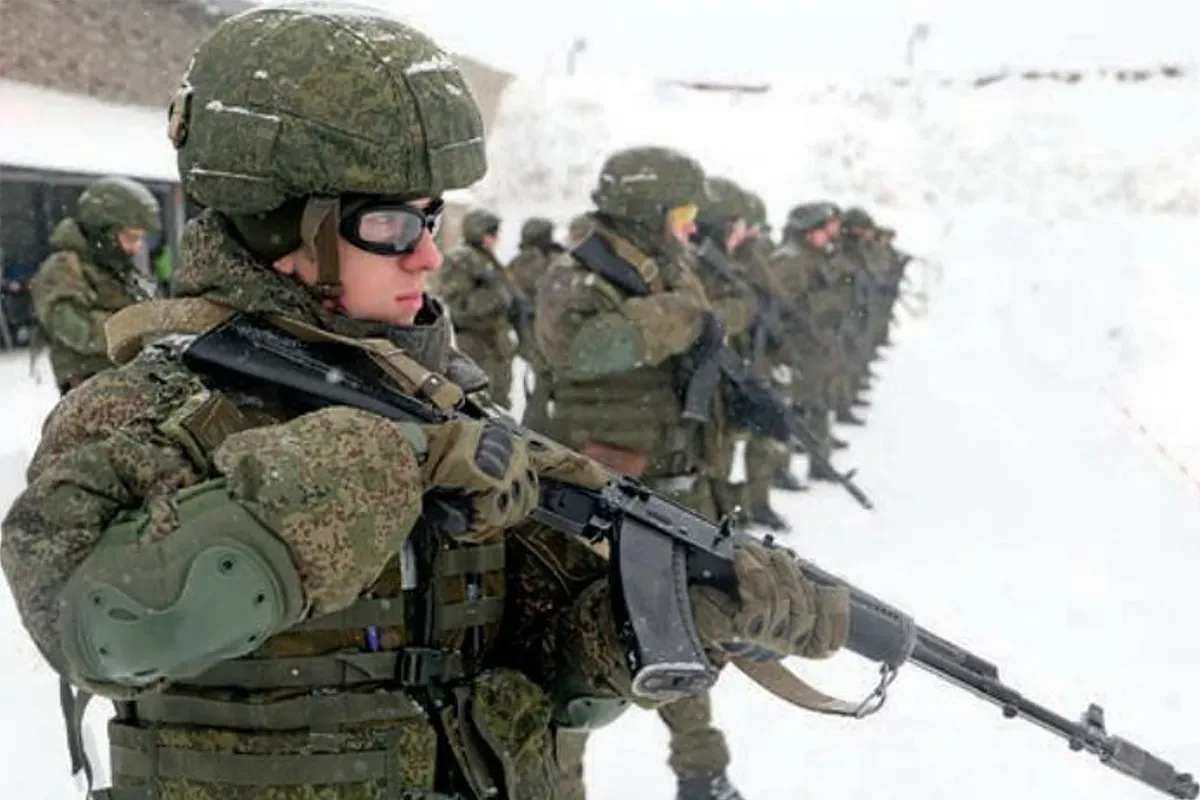
As the war dragged on, Russia needed men. Material it could get by increasing its defence budget (at the time of writing that budget is 15 trillion rubles, around 7.2% of GDP) but without men, material could not be used.
Men were needed to man guns, ferry supplies and direct other men in the brutal endeavours of Putin’s war.
Yet a full mobilisation of Russia’s vast manpower resources would be exceedingly politically risky. After all, Russia was not fighting a ‘war’. It was a ‘Special Military Operation’; To even name it as a war risked legal repercussions.
So if it wasn’t a war, then the mobilisation wasn’t a mobilisation either.
It was a ‘partial’ mobilisation to assist the ‘special military operation’.
It worked.
Within months, the Russian’s recouped their losses. Fresh troops, poorly trained perhaps and expended as readily as artillery ammunition and missiles, but existing nonetheless, were deployed.
Into 2024 and 2025, the vast number of troops have allowed Russia to continue attacks and hold its captured ground…
Defence in depth
In some areas, it was estimated that there were 5 mines per square metre of ground on average.
That was the analysis in the wake of the Ukrainian counter offensive of 2023.
In the time between announcing then executing the operation, Russia fortified its areas to an extensive degree.
Hence, when Ukraine did attack, it did so into the teeth of heavy Russian fortifications.
Russia marshalled many weapons to blunt Ukrainian attacks. KA-52 attack helicopters sniped Ukrainian armoured vehicles from miles away. Drone-directed artillery took a heavy toll. Mines crippled man and machine alike.
Eventually, the counter offensives objectives were scaled down, then the offensive itself petered out.
Whilst many Ukrainian forces who took part, such as the 47th Mechanized brigade, would go on to make their mark on the war, the counter offensive would sadly see the removal of Ukraine’s original commander in chief, General Zaluzhnyi.
In the years that followed Russia would prove it was unable to conduct proper combined arms offensive operations, wasting the lives of thousands in slow costly attritional advances.
Yet in defence, the Bear could hold its own.
The Drone Game
Whilst Ukraine has been the leader in drone innovation, Russia has scored numerous successes with its own drone development and production.
The adoption and subsequent refinement of the Shahed drones provided by Iran has given it a formidable terror weapon that continues to inflict substantial losses on Ukraine’s civilian population and civilian infrastructure, especially electricity-generating aspects.
Additionally, it was Russia that was the first to recognise the capabilities of fibre optic drones. Whilst Ukraine has slowly caught up with the Russians regards the production of these types of drone, Russia has continued to leverage them as lethal and dangerous aspects of battlefield dominance.
Finally, the creation of the ‘Rubicon’ Drone specialists within the Russian military has created a specialist and effective dedicated drone unit that was instrumental in inflicting serious losses on Ukrainian troops during the Kursk offensive in 2024.
Glide Bombs
At the start of the war, Russia’s precision strike capabilities were not effectively leveraged. Often times expensive cruise missiles landed in empty fields, as the intelligence indicating the location of Ukrainian units was quickly out of date as they dispersed.
The Surface to Air Missile threat within Ukrainian borders quickly cut down the amount of close air support the Russians could depend on from their aircraft.
Yet over time, Russia leveraged the deployment and manufacture of an old concept made deadly on the Ukrainian battlefield; Glide bombs.
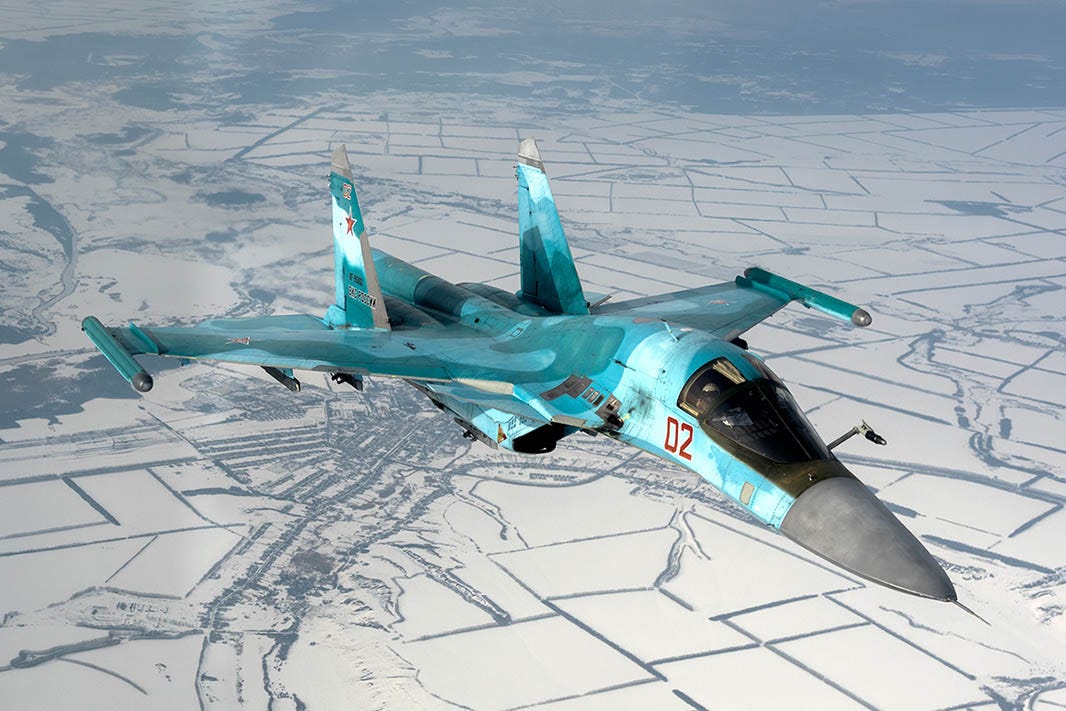
A simple and easy to manufacture Glide Bomb ‘kit’ could be attached to existing stocks of often Soviet era dumb bombs, turning them into relatively accurate guided munitions. The ‘relatively’ aspect was mitigated by the massive explosive potential of these weapons; the bombs themselves were often 500 lb’s and bigger.
Paired with existing SU-34 strike fighters, Glide Bombs allowed the Russian’s for a time to literally blast their way through Ukrainian defenses and allow slow incremental advances.
Today the Glide Bomb threat has been reduced but not elimanated. Updated Electronic Counter Measures make glide bombs considerably more inaccurate and the shooting down of many SU-34’s has made Russian pilots considerably more cautious.
Yet it is still a cheap, effective weapon that Russia has access to; manufactured in large numbers.
Disinformation Warfare
If there is one aspect in this war where Russia appears to be leagues ahead of Ukraine, it is in the dissemination of disinformation and propaganda.
Its direct cyber attacks on Ukraine may have been rebuffed but other activates online have been much more successful.
Whilst Russia’s locally directed propaganda is often derided as amateurish and imperialist, its attempts at disinformation outside of Russia have been formidably effective, especially in America.
Media outlets and especially conservative Republicans have been caught repeating Kremlin propaganda points as truth, seriously undermining Ukraine’s efforts to gain the necessary support to continue their fight.
Mainstream media's attempts to provide a balanced argument often run into the issue of the fact that the Russian side of any argument, is often a complete lie.
Social media does not help the situation. Russian trolls and bots propagate every social media platform, undermining the conversation.
It is estimated that Vladimir Putin has spent a relatively modest amount of money on these disinformation campaigns, yet analysts believe it has had an outsized effect on the war and its conduct, the spread of Russian Disinformation reaching to the very highest levels of political leadership.
Russian Disinformation, within the wider issue and execution of Russian Hybrid Warfare, is a serious and continuing threat.
I will soon publish a more detailed article on this particular aspect of Russian endeavours.
Devils Bargains
Sadly for Ukraine, due to Russian efforts, the collective West is not united in its support of Ukraine.
Some countries have walked an effective political tight rope, Türkiye in particular. Whilst on the one hand providing Ukraine with some of its most effective drones in the early part of the conflict, Türkiye has also maintained good relations with Vladimir Putin’s Russia.
Other governments have been much more blunt in their near-universal support of Russia. The governments of both Hungary and Slovakia have provided only basic support to Ukraine and their leaders seem almost to directly support Russia in its attempts to win the war in Russia’s favour.
While some have described the likes of Viktor Orban as no more than a pantomime villain in the European Union, he has still proven a constant and persistent thorn in the side of Ukrainian diplomatic efforts.
The Slovakian president has likewise shown to be much more interested in maintaining lucrative gas deals with Russia than supporting Ukraine.
The Economic War
This leads on to another aspect where Russia is leveraging its resources; Economic war.
Using the likes of its shadow fleet and existing arrangements with their allies such as China and India, Russia has been able to use its oil reserves to feed its war machine, seemingly able to circumvent many sanctions that have been constantly leveraged against Russia. Russia continues to receive a steady flow of currency sufficient to keep the war going.
Whilst the shadow fleet has encountered more and more difficulties due to sanctions, Russia is still able to provide a huge amount of oil and gas to customers, keeping its flow of war-required currency going.
Nuclear Fears
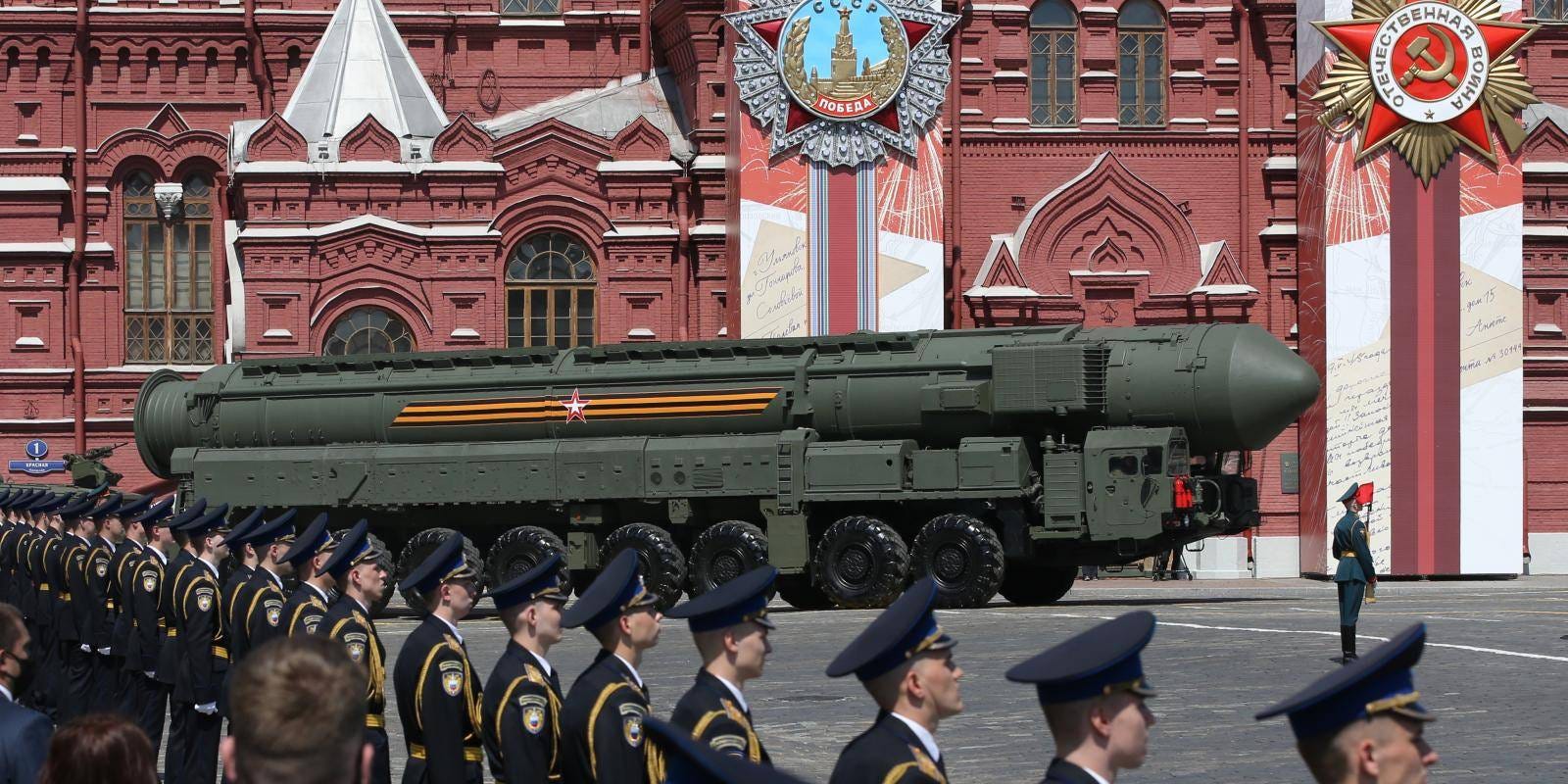
Whilst many have mocked Russia’s attempts at nuclear sabre-rattling, these attempts continue to have an outsized effect on decision-making by Western governments.
During the Biden administration, in the early years of the war, the nuclear concern was real within the administration and this informed decision making around its provision of aid.
With the benefit of hindsight, if more American and western aid had been provided to Ukraine in the early part of the conflict it is entirely possible that the conflict would actually be resolved by now.
However, because of the concerns around Russia’s nuclear rhetoric and the unpredictable nature of Vladimir Putin himself, that decision was not upheld and Ukraine suffered as a result.
Hybrid Warfare
Sabotage operations that are classified as ‘Arson’.
Russia’s list of Hybrid Warfare tactics, and missions, is long. To call them skillful is to give them too much credit, but to call them effective, belligerent, and relentless, is accurate.
Due to the difficulties in even defining what Hybrid Warfare is, the Kremlin seems free to continuously test the West with false flag operations and a variety of other attacks that would once have been called ‘Black ops’ yet because they occur during peace time seem to come under the mockery of ‘Hybrid Warfare’.
Russia has found the perfect way to test NATO and the West, and yet not trigger a serious kinetic response.
Well played Bear.
I hope to write a separate article soon to explain more on just what Hybrid Warfare is.
Mass manufacturing and sanctions evasion
Whilst sanctions have seriously curtailed production of high-tech equipment, those sanctions have not stopped it entirely.
Advanced microchips continue to flow in through 3rd party countries and despite increasing sanctions, the Russians always find a way to eventually get the necessary equipment and technology required to produce the likes of cruise missiles and drones.
Additionally, like Ukraine, Russia has put its economy on a full war footing. Cheaper and easier to produce munitions, such as drones, are now mass-produced in huge factories across Russia.
Artillery is being produced at a high rate, including by Russia’s ally North Korea, that is also providing effectively slave labour to Russian factories.
Russia may not be able to produce the same volume of high tech equipment or conduct the same level of research and development of its most advanced weapons, but it can still produce a lot of equipment and weapons such as simple drones, guns and ammunition. More than enough to equip their badly trained soldiers.
Conclusions
Whilst Russia has made many bad decisions and mistakes on the battlefield, we must also acknowledge when something works and more importantly, figure out how to counter tactics and technologies when they are successful.
Shahed drones and fibre optic drones. Disinformation Campaigns. Economic warfare. Mobilization.
Russia knows how to leverage some of its advantages properly. We in the West must both analysis these tried and tested methods, and figure out how to beat them.
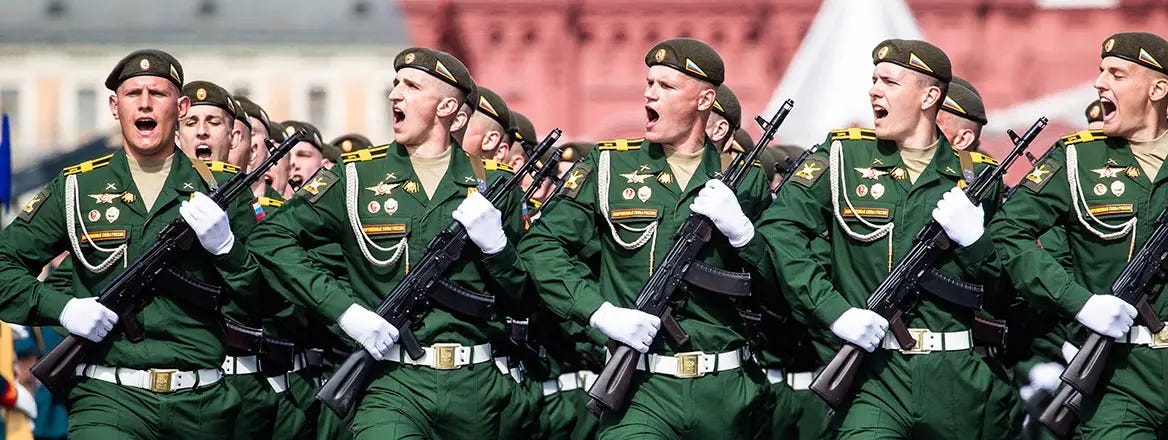
"Know your enemy" is classic advice for a reason.
How to expand this conversation to the point of engaging non-aligned nations with significant grassroot pro russian sentiment thanks to real grievances against the Western world (while governments condemned) ?